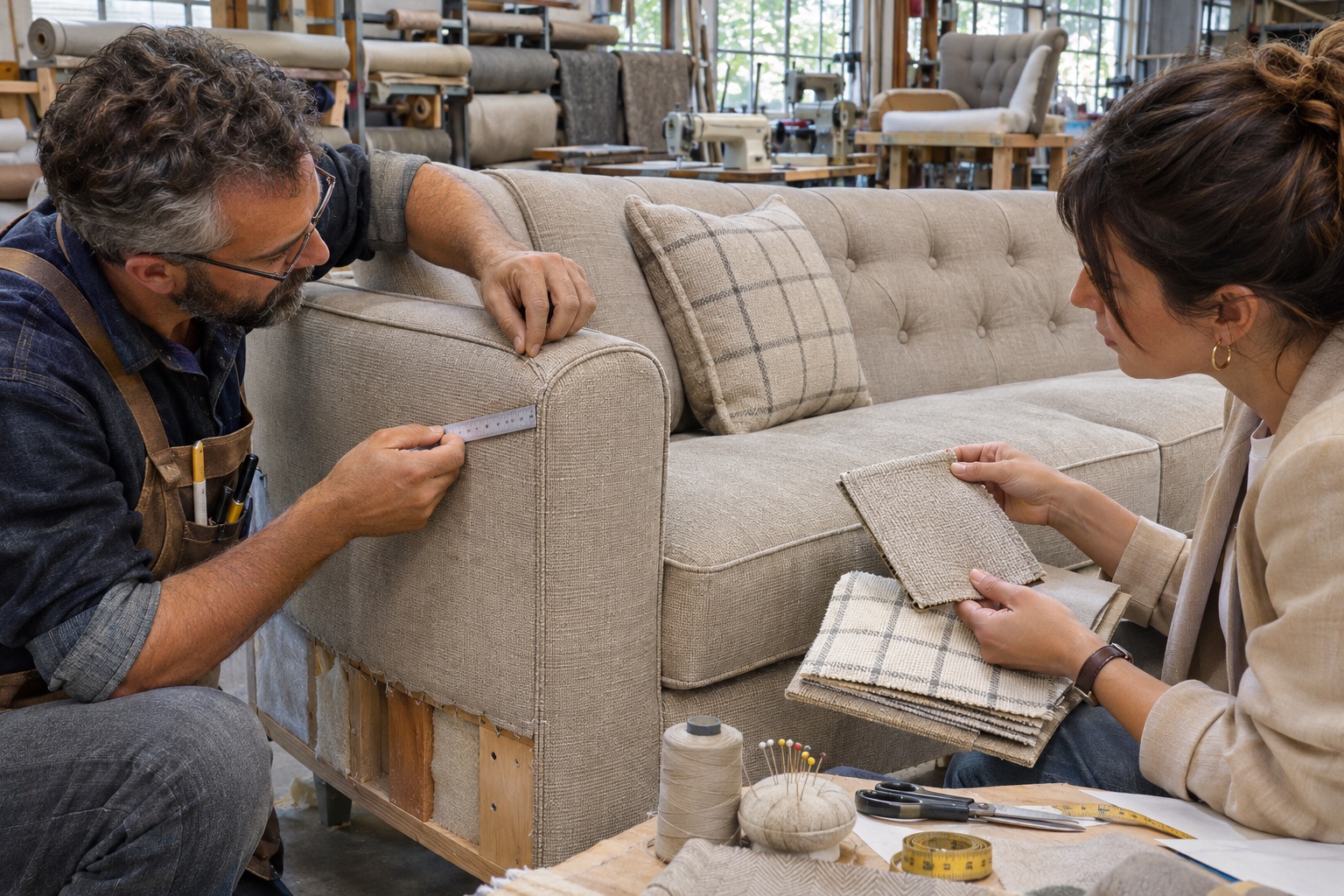
Sofa Cushion and Filling Specification: Layers, Support and Recovery
Control upholstery filling with sections, material layers, traceable grades, firmness combinations, wrapping, dimensions and first-article feel.
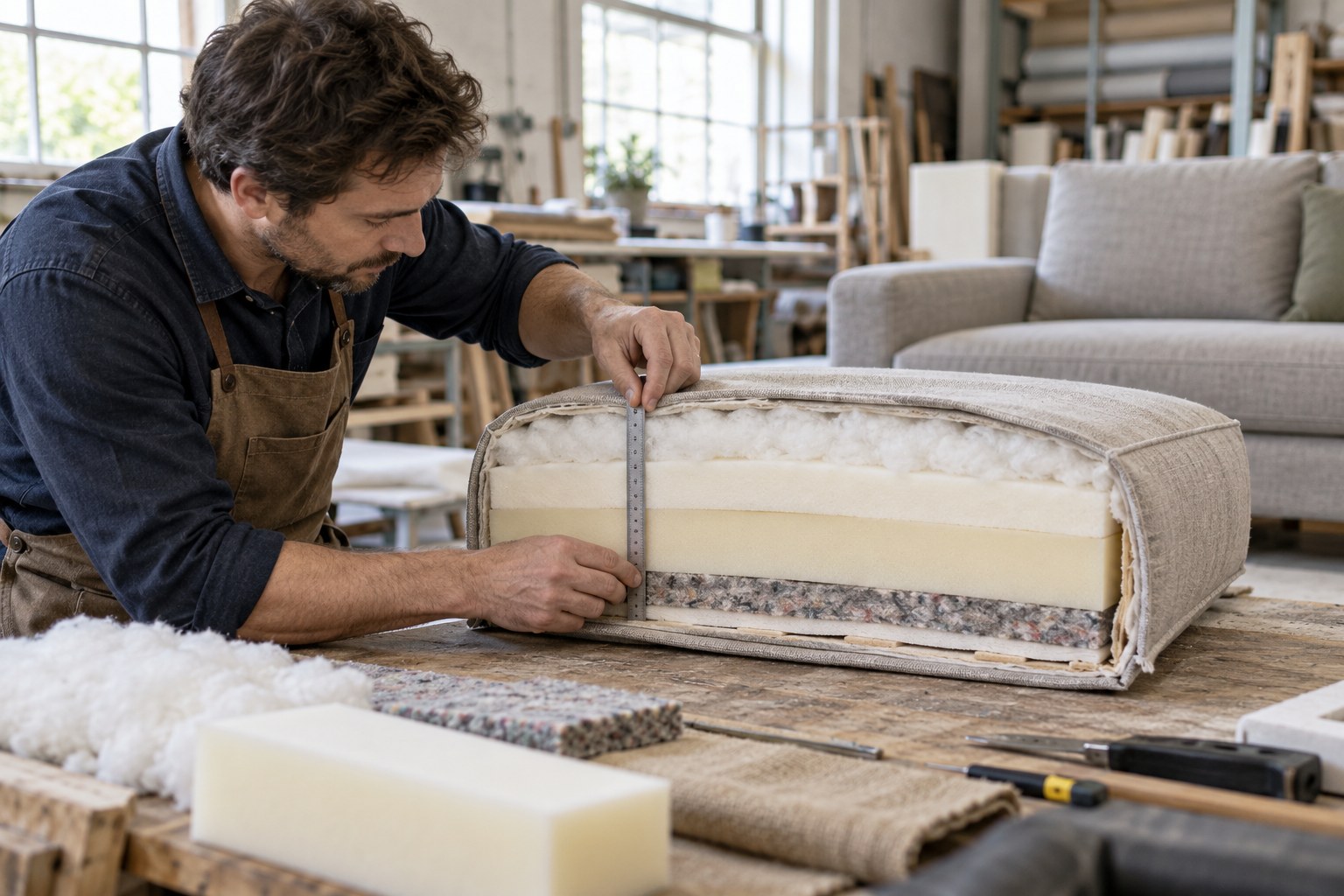
“High-density foam” and “medium firm” are not acceptance criteria. Draw sections for seat, back and arms; record each layer, thickness, traceable material grade, wrap and dimensions; and use an approved first article to establish seat depth, sink, support, recovery, wrinkling and consistency.
Scope of this guide
This guide provides an execution framework for furniture sourcing and product selection. Contract, inspection, freight, installation and destination-country requirements should be confirmed in writing by the relevant supplier or professional adviser.
Set the decision standard first
- Draw filling sections by component
- Use traceable material definitions
- Define wraps and edge treatment
- Approve first-article feel and recovery
What to define and retain
| Specification field | What to define |
|---|---|
| Draw filling sections by component | Show layers, thickness, shape and fixing for seat, back, arms and loose cushions |
| Use traceable material definitions | Record supplier codes, grades, density or other agreed indicators rather than marketing names alone |
| Define wraps and edge treatment | Confirm fibre, feather or other wrap basis, liners, zips, inner bags and edge shaping |
| Approve first-article feel and recovery | Compare sink, support, rebound, wrinkles and seat consistency under defined conditions and retain video and notes |
| Control production dimensions and changes | Measure cores and finished cushions and reassess appearance, feel and durability when a layer changes |
Recommended workflow
- Draw filling sections by component: Show layers, thickness, shape and fixing for seat, back, arms and loose cushions
- Use traceable material definitions: Record supplier codes, grades, density or other agreed indicators rather than marketing names alone
- Define wraps and edge treatment: Confirm fibre, feather or other wrap basis, liners, zips, inner bags and edge shaping
- Approve first-article feel and recovery: Compare sink, support, rebound, wrinkles and seat consistency under defined conditions and retain video and notes
- Control production dimensions and changes: Measure cores and finished cushions and reassess appearance, feel and durability when a layer changes
At every step, retain the product ID, version, date, owner and written confirmation so critical decisions do not remain only in chats or verbal discussions.
Common execution problems
- If this is not defined in writing: Draw filling sections by component — Show layers, thickness, shape and fixing for seat, back, arms and loose cushions
- If this is not defined in writing: Use traceable material definitions — Record supplier codes, grades, density or other agreed indicators rather than marketing names alone
- If this is not defined in writing: Define wraps and edge treatment — Confirm fibre, feather or other wrap basis, liners, zips, inner bags and edge shaping
Execution checklist
- Confirmed and retained: Use traceable material definitions
- Confirmed and retained: Define wraps and edge treatment
- Confirmed and retained: Approve first-article feel and recovery
- Confirmed and retained: Control production dimensions and changes
Related guides on this site
- How to Specify Leather Furniture: Type, Surface, Yield and Shade
- Furniture Upholstery Fabric Specification: Fibre, Batch and Direction
- Powered Furniture Specification: Power, Controls, Wiring and Destination Rules
Frequently asked questions
Does higher foam density always mean a firmer seat?
No. Density, hardness, formulation, thickness and layering interact, so use both data and an approved first article.
Can a cushion be judged immediately after unpacking?
Compression and environment can affect recovery; allow the supplier-defined recovery period before comparison.
Use sections and a first-article reference to make comfort repeatable
For project-specific execution, prepare the destination country, room list, quantities, critical dimensions, material preferences, budget direction and target timing, then use the contact section on this site.