Furniture Colour and Gloss Approval: Samples, Lighting and Batch Control
Use physical samples, consistent viewing conditions, finish location, gloss targets and batch comparison to control furniture appearance.
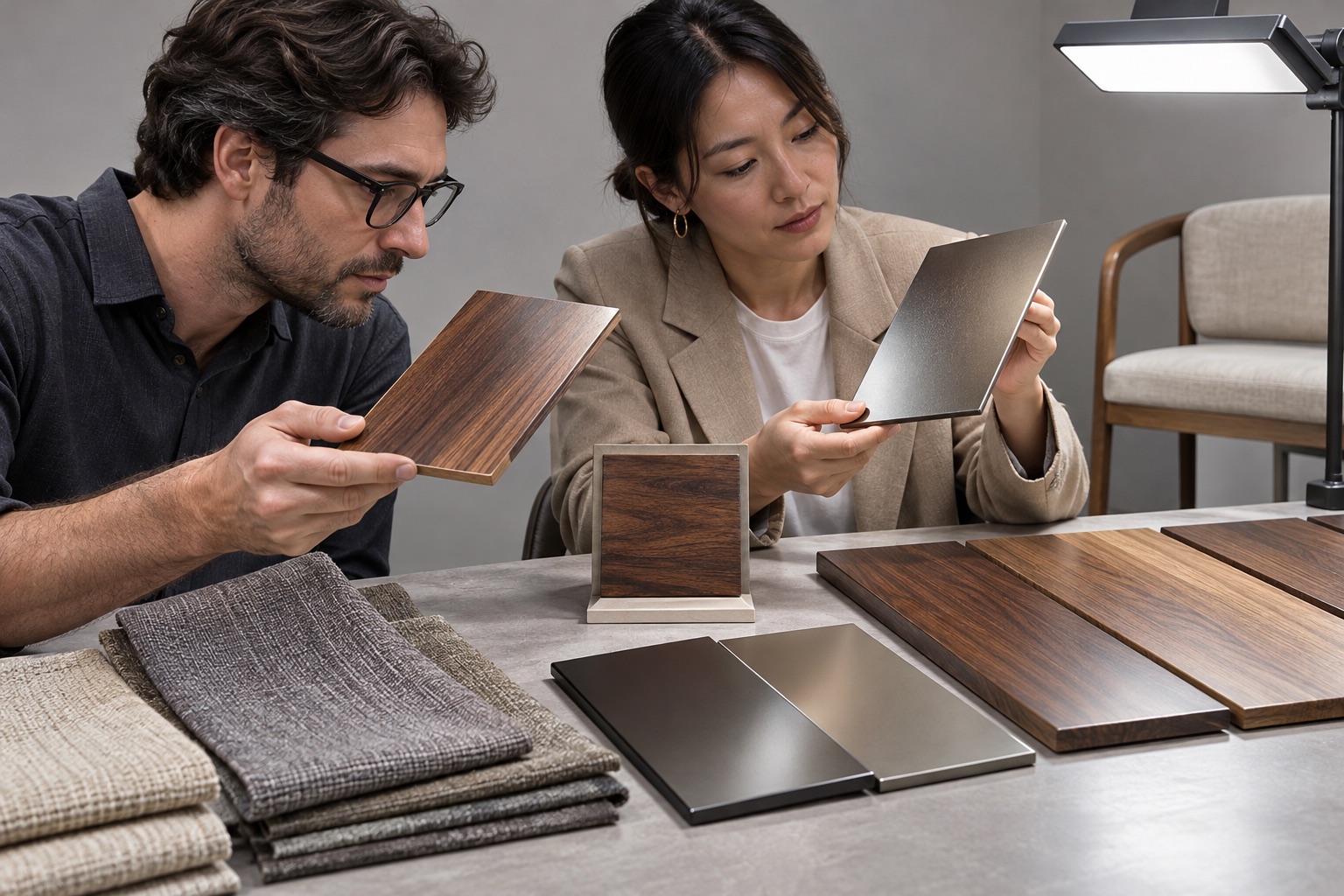
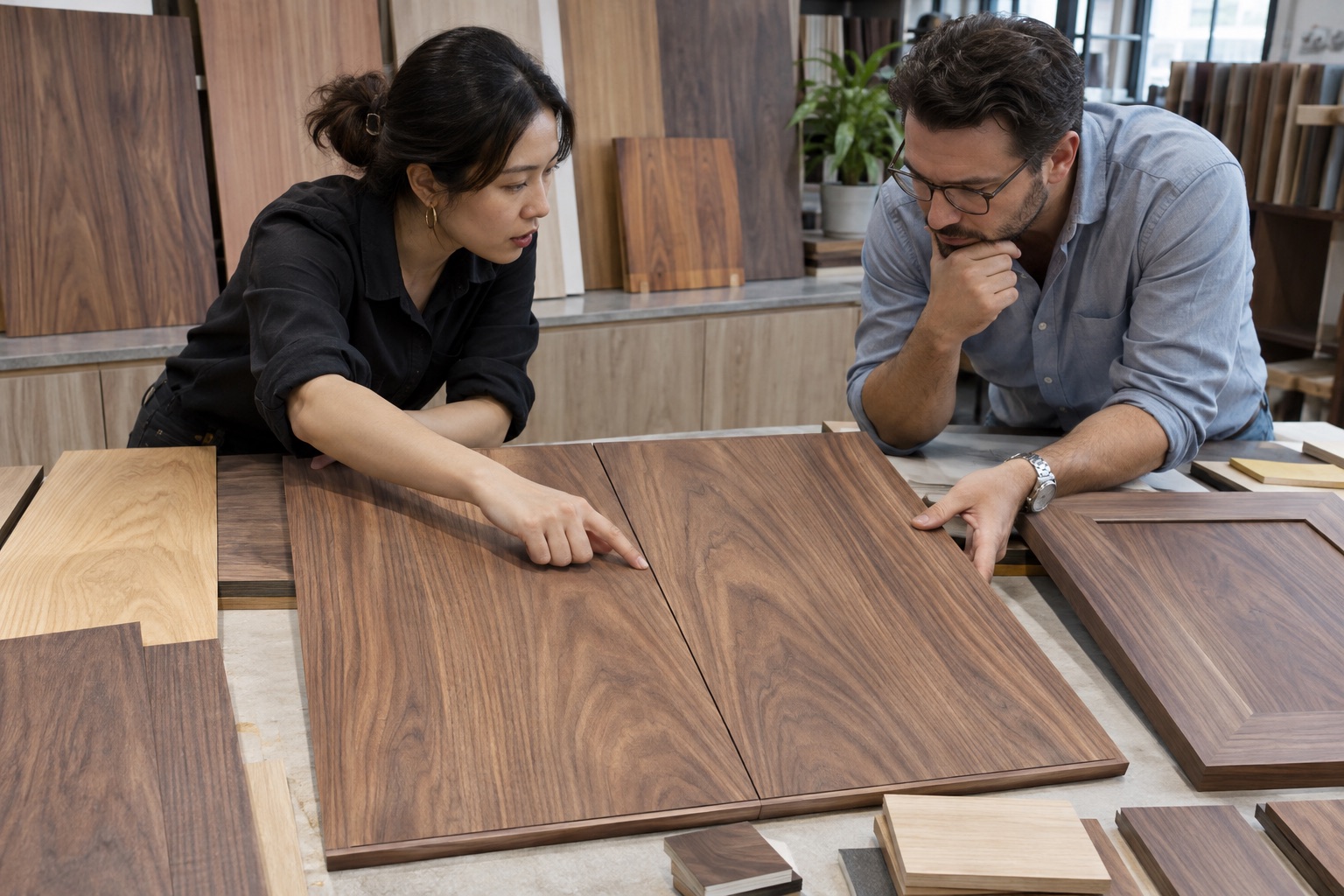
Furniture colour should not be approved from a screen image or colour name alone. Create numbered physical standards that record material, substrate, coating, texture and gloss, then compare them under agreed light, distance and angle. Wood, metal, fabric and stone respond differently to light, so control each material separately and retain comparison records across production batches.
Scope of this guide
This guide provides an execution framework for furniture sourcing and product selection. Contract, inspection, freight, installation and destination-country requirements should be confirmed in writing by the relevant supplier or professional adviser.
Set the decision standard first
- Create physical approval standards
- Standardize viewing conditions
- Separate colour, texture and gloss
- Coordinate unlike materials
What to define and retain
| Specification field | What to define |
|---|---|
| Create physical approval standards | Give every material and finish an ID, date, orientation and approver so chat photographs are not the only reference |
| Standardize viewing conditions | Agree daylight or a defined indoor light, viewing distance, angle and background before judging under different colour temperatures or reflections |
| Separate colour, texture and gloss | Define hue, depth, visible grain and matte or glossy character separately so a similar colour does not hide a different finish |
| Coordinate unlike materials | Wood, metal, leather and fabric in one scheme may not reproduce one identical colour; use individual samples and an overall harmony target |
| Control production batches | Compare the first unit and later batches to the master sample, record batch and location and isolate visibly divergent parts |
Recommended workflow
- Create physical approval standards: Give every material and finish an ID, date, orientation and approver so chat photographs are not the only reference
- Standardize viewing conditions: Agree daylight or a defined indoor light, viewing distance, angle and background before judging under different colour temperatures or reflections
- Separate colour, texture and gloss: Define hue, depth, visible grain and matte or glossy character separately so a similar colour does not hide a different finish
- Coordinate unlike materials: Wood, metal, leather and fabric in one scheme may not reproduce one identical colour; use individual samples and an overall harmony target
- Control production batches: Compare the first unit and later batches to the master sample, record batch and location and isolate visibly divergent parts
At every step, retain the product ID, version, date, owner and written confirmation so critical decisions do not remain only in chats or verbal discussions.
Common execution problems
- If this is not defined in writing: Create physical approval standards — Give every material and finish an ID, date, orientation and approver so chat photographs are not the only reference
- If this is not defined in writing: Standardize viewing conditions — Agree daylight or a defined indoor light, viewing distance, angle and background before judging under different colour temperatures or reflections
- If this is not defined in writing: Separate colour, texture and gloss — Define hue, depth, visible grain and matte or glossy character separately so a similar colour does not hide a different finish
Execution checklist
- Confirmed and retained: Standardize viewing conditions
- Confirmed and retained: Separate colour, texture and gloss
- Confirmed and retained: Coordinate unlike materials
- Confirmed and retained: Control production batches
Related guides on this site
- Approving Wood Furniture Colour and Finish Samples in Foshan
- Metal Furniture Frame and Finish Specifications in Foshan
- Furniture Upholstery Fabric Specification: Fibre, Batch and Direction
Frequently asked questions
Can a phone photograph approve colour?
It can support communication and screening, but camera, display and lighting variation mean it should not replace a physical standard or agreed measurement method.
Can different materials be required to match exactly?
They may appear close, but texture, reflection and surface structure create differences. Approve each sample and define the desired overall relationship.
Approve colour with a sample, viewing conditions and batch records
For project-specific execution, prepare the destination country, room list, quantities, critical dimensions, material preferences, budget direction and target timing, then use the contact section on this site.