Furniture Feet, Glides and Levelling Specification for Site Fit
Define foot construction, load connection, glide material, adjustment range, floor protection and spares for stable installation.
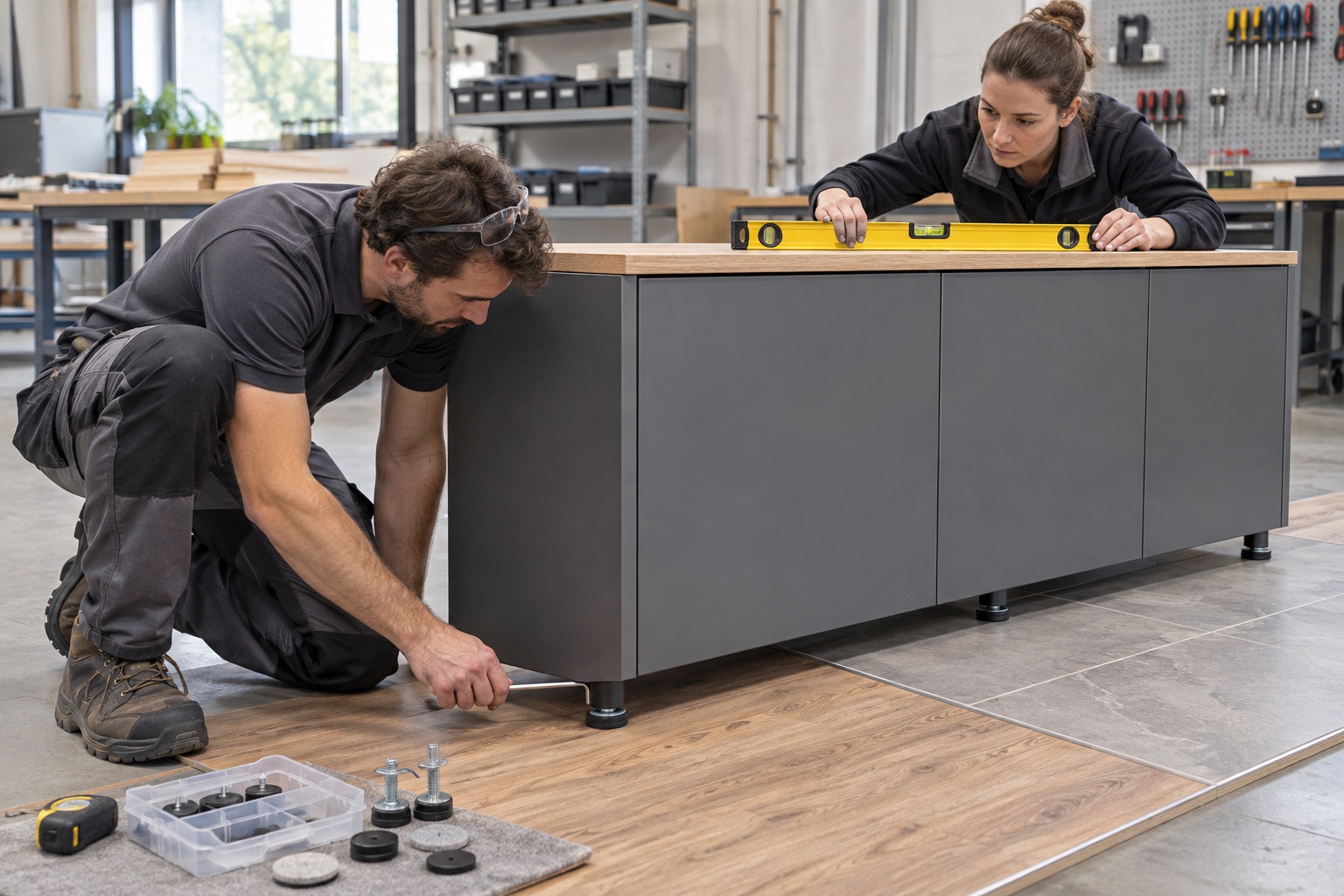
Furniture feet and glides are small components with direct effects on stability, floor protection and installation. Define foot material, dimensions, structural connection, quantity and position; whether the glide is fixed or adjustable; adjustment direction and usable range; and the contact surface for timber, tile, stone or carpet. Include reassembly after transport, site levelling and spare requirements.
Scope of this guide
This guide provides an execution framework for furniture sourcing and product selection. Contract, inspection, freight, installation and destination-country requirements should be confirmed in writing by the relevant supplier or professional adviser.
Set the decision standard first
- Define foot construction and connection
- Confirm the glide and floor contact
- Specify levelling method and range
- Check support and interference
What to define and retain
| Specification field | What to define |
|---|---|
| Define foot construction and connection | State material, profile, size, quantity, location, thread or connector and how it attaches to the main structure |
| Confirm the glide and floor contact | Define glide material, diameter, colour, slip or protection intent and verify it against the actual floor type |
| Specify levelling method and range | State whether adjustment is available, tool or hand operation, rotation direction, effective range and locking after levelling |
| Check support and interference | Verify every foot carries load and does not conflict with skirting, carpet edges, doors, cables or cleaning equipment |
| Prepare installation information and spares | Provide a foot layout, connector list, sequence and protection notes and retain glides and fasteners as project-appropriate spares |
Recommended workflow
- Define foot construction and connection: State material, profile, size, quantity, location, thread or connector and how it attaches to the main structure
- Confirm the glide and floor contact: Define glide material, diameter, colour, slip or protection intent and verify it against the actual floor type
- Specify levelling method and range: State whether adjustment is available, tool or hand operation, rotation direction, effective range and locking after levelling
- Check support and interference: Verify every foot carries load and does not conflict with skirting, carpet edges, doors, cables or cleaning equipment
- Prepare installation information and spares: Provide a foot layout, connector list, sequence and protection notes and retain glides and fasteners as project-appropriate spares
At every step, retain the product ID, version, date, owner and written confirmation so critical decisions do not remain only in chats or verbal discussions.
Common execution problems
- If this is not defined in writing: Define foot construction and connection — State material, profile, size, quantity, location, thread or connector and how it attaches to the main structure
- If this is not defined in writing: Confirm the glide and floor contact — Define glide material, diameter, colour, slip or protection intent and verify it against the actual floor type
- If this is not defined in writing: Specify levelling method and range — State whether adjustment is available, tool or hand operation, rotation direction, effective range and locking after levelling
Execution checklist
- Confirmed and retained: Confirm the glide and floor contact
- Confirmed and retained: Specify levelling method and range
- Confirmed and retained: Check support and interference
- Confirmed and retained: Prepare installation information and spares
Related guides on this site
- How to Specify Furniture Hardware in Foshan
- Furniture Dimensions and Tolerances in Foshan: Drawings and Acceptance
- Knock-Down vs Assembled Furniture for Export from Foshan
Frequently asked questions
Does a softer glide always protect the floor better?
Not necessarily. Material, contact area, load, floor type and long-term use all matter, so confirm on the intended surface.
Can adjustable feet solve every uneven floor?
No. They address variation within their designed range; significant floor conditions still require site assessment and correction.
Give every furniture item a defined structural path to the floor
For project-specific execution, prepare the destination country, room list, quantities, critical dimensions, material preferences, budget direction and target timing, then use the contact section on this site.