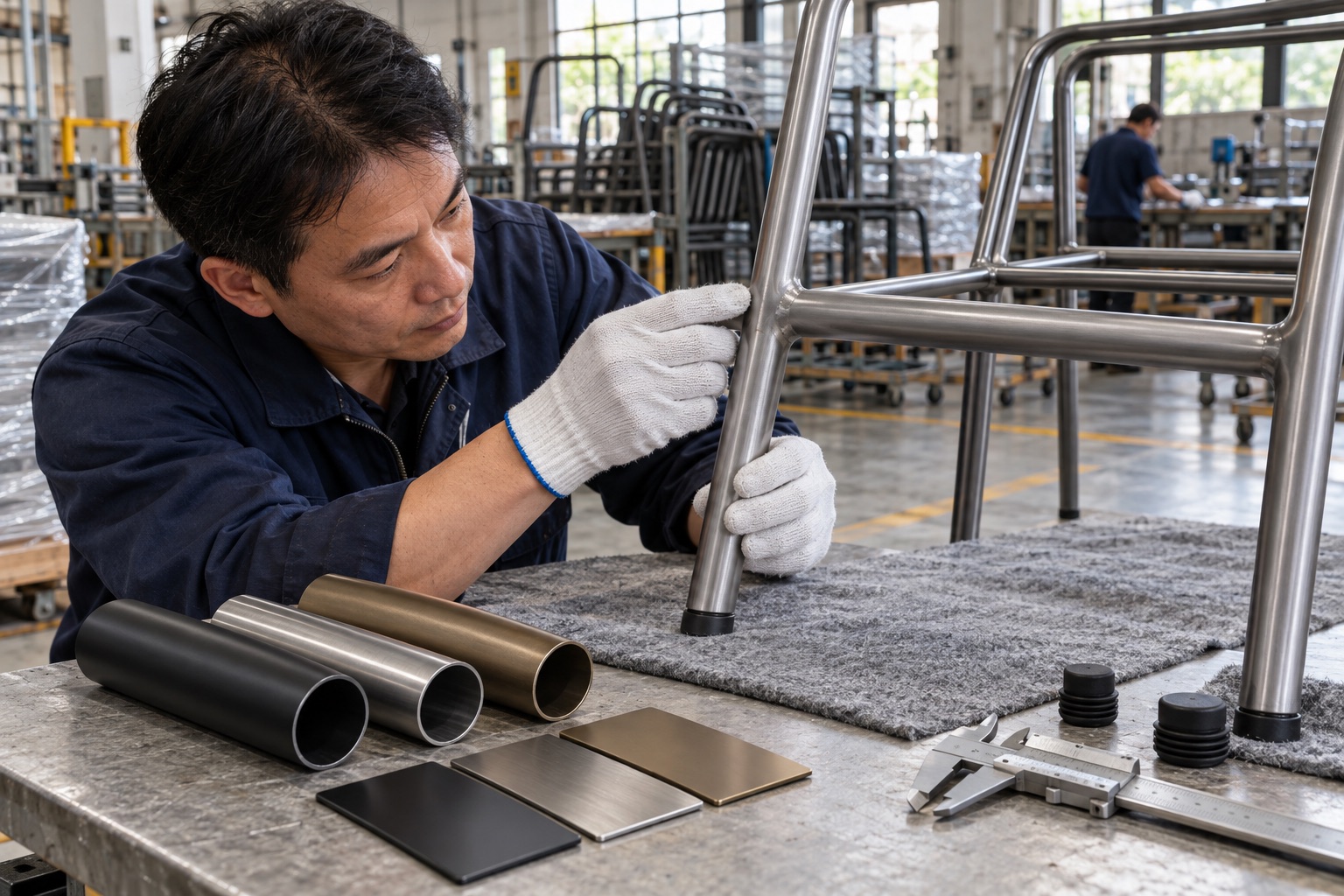
How to Specify Furniture Hardware in Foshan
Define hinges, runners, connectors and spares through function, installation, finish, verification, compatibility and replacement rules.

A furniture hardware specification needs more than a brand name or “high-quality hardware.” Define location, function, installation, material and finish, movement or adjustment requirements, verification, substitution rules and spares so production, inspection and installation follow the same standard.
Scope of this guide
This guide provides an execution framework for furniture sourcing and product selection. Contract, inspection, freight, installation and destination-country requirements should be confirmed in writing by the relevant supplier or professional adviser.
Set the decision standard first
- Create a hardware schedule by location
- Define function and installation
- Approve material and finish
- Set verification and substitution rules
What to define and retain
| Specification field | What to define |
|---|---|
| Create a hardware schedule by location | Use product ID and component position for hinges, runners, connectors, castors, handles and levellers |
| Define function and installation | Record opening direction, soft close, travel, adjustment range, hole pattern and disassembly needs |
| Approve material and finish | Set colour, gloss, feel, protection needs and acceptable appearance variation |
| Set verification and substitution rules | Define samples, function tests, compatible dimensions and written approval for alternatives |
| Prepare spares and installation information | List spare quantities, separate labels, tools and replacement instructions for the project |
Recommended workflow
- Create a hardware schedule by location: Use product ID and component position for hinges, runners, connectors, castors, handles and levellers
- Define function and installation: Record opening direction, soft close, travel, adjustment range, hole pattern and disassembly needs
- Approve material and finish: Set colour, gloss, feel, protection needs and acceptable appearance variation
- Set verification and substitution rules: Define samples, function tests, compatible dimensions and written approval for alternatives
- Prepare spares and installation information: List spare quantities, separate labels, tools and replacement instructions for the project
At every step, retain the product ID, version, date, owner and written confirmation so critical decisions do not remain only in chats or verbal discussions.
Common execution problems
- If this is not defined in writing: Create a hardware schedule by location — Use product ID and component position for hinges, runners, connectors, castors, handles and levellers
- If this is not defined in writing: Define function and installation — Record opening direction, soft close, travel, adjustment range, hole pattern and disassembly needs
- If this is not defined in writing: Approve material and finish — Set colour, gloss, feel, protection needs and acceptable appearance variation
Execution checklist
- Confirmed and retained: Define function and installation
- Confirmed and retained: Approve material and finish
- Confirmed and retained: Set verification and substitution rules
- Confirmed and retained: Prepare spares and installation information
Related guides on this site
- How to Specify Stone Furniture Tops in Foshan
- Furniture Dimensions and Tolerances in Foshan: Drawings and Acceptance
- Knock-Down vs Assembled Furniture for Export from Foshan
Frequently asked questions
Is specifying the hardware brand enough?
Usually not. A brand may offer several series, sizes and functions; identify the model or verifiable performance and installation requirements.
Can hardware be substituted during production?
Provide alternative data and samples first, assess fit, function, appearance and maintenance, then obtain written approval.
Put every hardware component into a verifiable specification
For project-specific execution, prepare the destination country, room list, quantities, critical dimensions, material preferences, budget direction and target timing, then use the contact section on this site.