How to Specify Leather Furniture: Type, Surface, Yield and Shade
Define leather type, application zones, thickness, hand, finish, batch shade, cutting rules and care evidence before ordering.
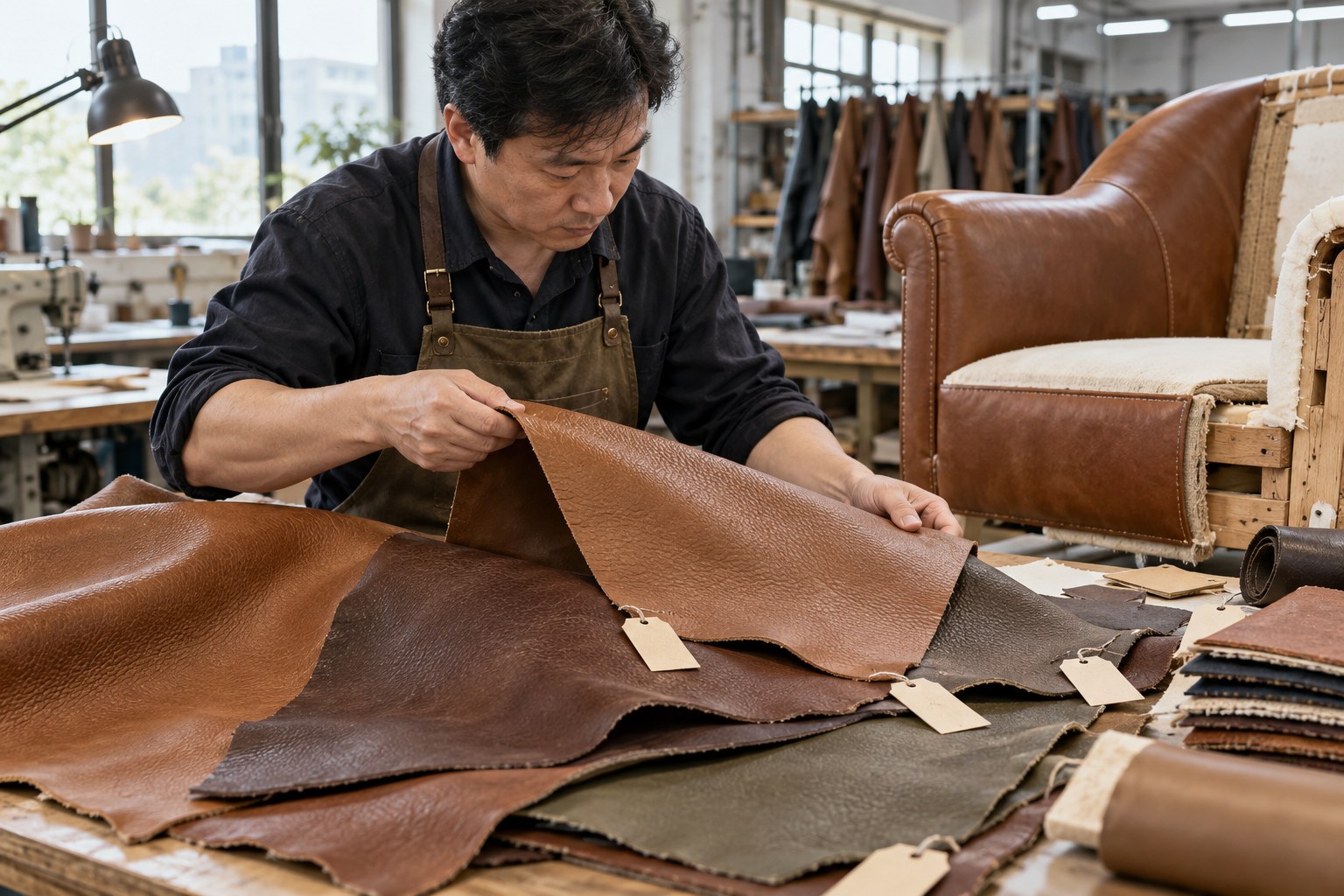
“Genuine leather” is not a complete specification. Ask the supplier to define and evidence the material, map where it is used and state what covers backs or hidden areas. Control colour, grain, gloss and hand with an approved reference, then address batch shade, natural markings, cutting position, substitution and care before production.
Scope of this guide
This guide provides an execution framework for furniture sourcing and product selection. Contract, inspection, freight, installation and destination-country requirements should be confirmed in writing by the relevant supplier or professional adviser.
Set the decision standard first
- Define the material and application zones
- Approve colour, grain and hand
- State thickness, joining and cutting rules
- Control batch shade and substitution
What to define and retain
| Specification field | What to define |
|---|---|
| Define the material and application zones | Clarify the leather description and supporting evidence and mark front, side, back, contact and hidden areas on the product drawing |
| Approve colour, grain and hand | Review under neutral and interior light, record gloss, texture, softness and coating feel and give the sample an ID |
| State thickness, joining and cutting rules | Confirm thickness range, full panels or joins, symmetry and acceptable natural markings by location |
| Control batch shade and substitution | Coordinate items used together and require reapproval when shade, availability or material changes |
| Retain care and test information | Obtain applicable cleaning limits, maintenance guidance and project-required test or compliance evidence |
Recommended workflow
- Define the material and application zones: Clarify the leather description and supporting evidence and mark front, side, back, contact and hidden areas on the product drawing
- Approve colour, grain and hand: Review under neutral and interior light, record gloss, texture, softness and coating feel and give the sample an ID
- State thickness, joining and cutting rules: Confirm thickness range, full panels or joins, symmetry and acceptable natural markings by location
- Control batch shade and substitution: Coordinate items used together and require reapproval when shade, availability or material changes
- Retain care and test information: Obtain applicable cleaning limits, maintenance guidance and project-required test or compliance evidence
At every step, retain the product ID, version, date, owner and written confirmation so critical decisions do not remain only in chats or verbal discussions.
Common execution problems
- If this is not defined in writing: Define the material and application zones — Clarify the leather description and supporting evidence and mark front, side, back, contact and hidden areas on the product drawing
- If this is not defined in writing: Approve colour, grain and hand — Review under neutral and interior light, record gloss, texture, softness and coating feel and give the sample an ID
- If this is not defined in writing: State thickness, joining and cutting rules — Confirm thickness range, full panels or joins, symmetry and acceptable natural markings by location
Execution checklist
- Confirmed and retained: Approve colour, grain and hand
- Confirmed and retained: State thickness, joining and cutting rules
- Confirmed and retained: Control batch shade and substitution
- Confirmed and retained: Retain care and test information
Related guides on this site
- Furniture Upholstery Fabric Specification: Fibre, Batch and Direction
- Sofa Cushion and Filling Specification: Layers, Support and Recovery
- Powered Furniture Specification: Power, Controls, Wiring and Destination Rules
Frequently asked questions
Are natural grain differences automatically defects?
No. Define where and how much variation is acceptable and how a furniture set should look together.
Can a small swatch approve an entire sofa?
It is risky alone; combine it with a larger panel, curved application or first article and control the batch.
Turn a leather label into an observable and approvable specification
For project-specific execution, prepare the destination country, room list, quantities, critical dimensions, material preferences, budget direction and target timing, then use the contact section on this site.