Glass Furniture Specifications: Thickness, Edges, Holes and Support
Define glass type, actual thickness, edges, holes, support contact, appearance, cleaning, packing and destination requirements by use.
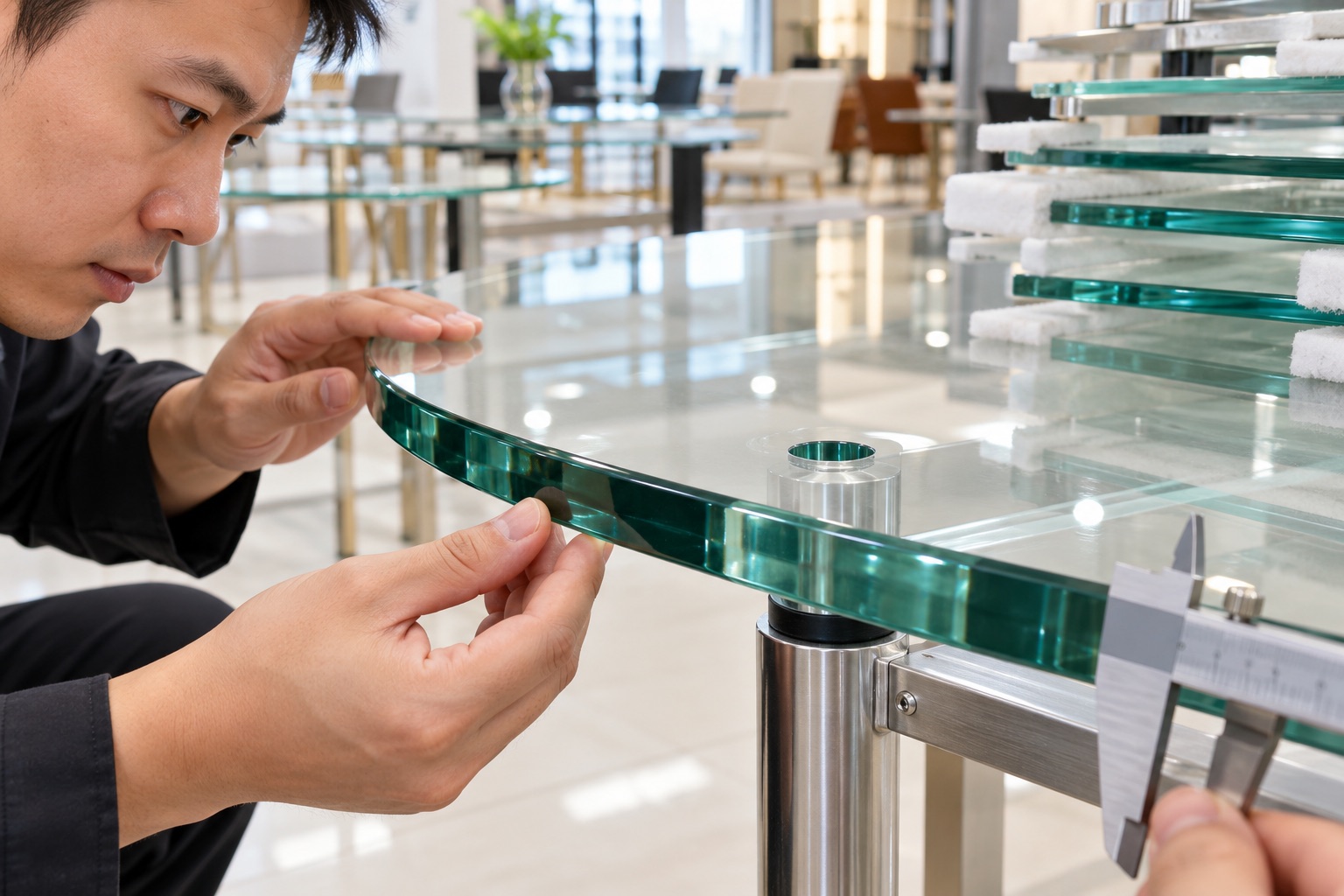
A glass furniture specification must start from the use and should say more than “tempered glass.” Identify whether the glass is a top, door, shelf or decorative part; record the supplier-declared type, actual thickness, dimensions, edges, corners, holes, support and cushioning; and have applicable safety and destination requirements checked by qualified parties.
Scope of this guide
This guide provides an execution framework for furniture sourcing and product selection. Contract, inspection, freight, installation and destination-country requirements should be confirmed in writing by the relevant supplier or professional adviser.
Set the decision standard first
- Define use and glass type
- Record actual dimensions and thickness
- Define edges, corners and holes
- Check support and contact
What to define and retain
| Specification field | What to define |
|---|---|
| Define use and glass type | State top, door, shelf or decorative location and obtain the supplier’s written confirmation of processing and intended application |
| Record actual dimensions and thickness | Use millimetres for length, width, thickness, shape, curves, holes and tolerances rather than nominal values alone |
| Define edges, corners and holes | Specify grinding, bevel, radius, polish, hole diameter, distance from edges and acceptance of visible chips |
| Check support and contact | Review span, fittings, suction pads or gaskets, metal contact, point loads and installation sequence |
| Control appearance, cleaning and packing | Agree viewing conditions for scratches or inclusions, cleaning, protective layers, separators, crates and vertical orientation |
Recommended workflow
- Define use and glass type: State top, door, shelf or decorative location and obtain the supplier’s written confirmation of processing and intended application
- Record actual dimensions and thickness: Use millimetres for length, width, thickness, shape, curves, holes and tolerances rather than nominal values alone
- Define edges, corners and holes: Specify grinding, bevel, radius, polish, hole diameter, distance from edges and acceptance of visible chips
- Check support and contact: Review span, fittings, suction pads or gaskets, metal contact, point loads and installation sequence
- Control appearance, cleaning and packing: Agree viewing conditions for scratches or inclusions, cleaning, protective layers, separators, crates and vertical orientation
At every step, retain the product ID, version, date, owner and written confirmation so critical decisions do not remain only in chats or verbal discussions.
Common execution problems
- If this is not defined in writing: Define use and glass type — State top, door, shelf or decorative location and obtain the supplier’s written confirmation of processing and intended application
- If this is not defined in writing: Record actual dimensions and thickness — Use millimetres for length, width, thickness, shape, curves, holes and tolerances rather than nominal values alone
- If this is not defined in writing: Define edges, corners and holes — Specify grinding, bevel, radius, polish, hole diameter, distance from edges and acceptance of visible chips
Execution checklist
- Confirmed and retained: Record actual dimensions and thickness
- Confirmed and retained: Define edges, corners and holes
- Confirmed and retained: Check support and contact
- Confirmed and retained: Control appearance, cleaning and packing
Related guides on this site
- Solid Wood, Veneer and Engineered Board Furniture Specifications
- Metal Furniture Frame and Finish Specifications in Foshan
- Outdoor Furniture Specifications: Exposure, Drainage, Fabric and Care
Frequently asked questions
Does “tempered glass” satisfy every safety requirement?
No. Use, dimensions, support, processing and destination rules still need written confirmation from the supplier and relevant specialists.
Is thicker glass always safer?
No. Performance also depends on glass type, span, holes, edges, support, loading and installation.
Confirm the glass, processing, support and transport as one specification
For project-specific execution, prepare the destination country, room list, quantities, critical dimensions, material preferences, budget direction and target timing, then use the contact section on this site.