Solid Wood, Veneer and Engineered Board Furniture Specifications
Define structure, substrate, veneer, edges, finish, samples and use conditions so identical wood labels do not hide different products.
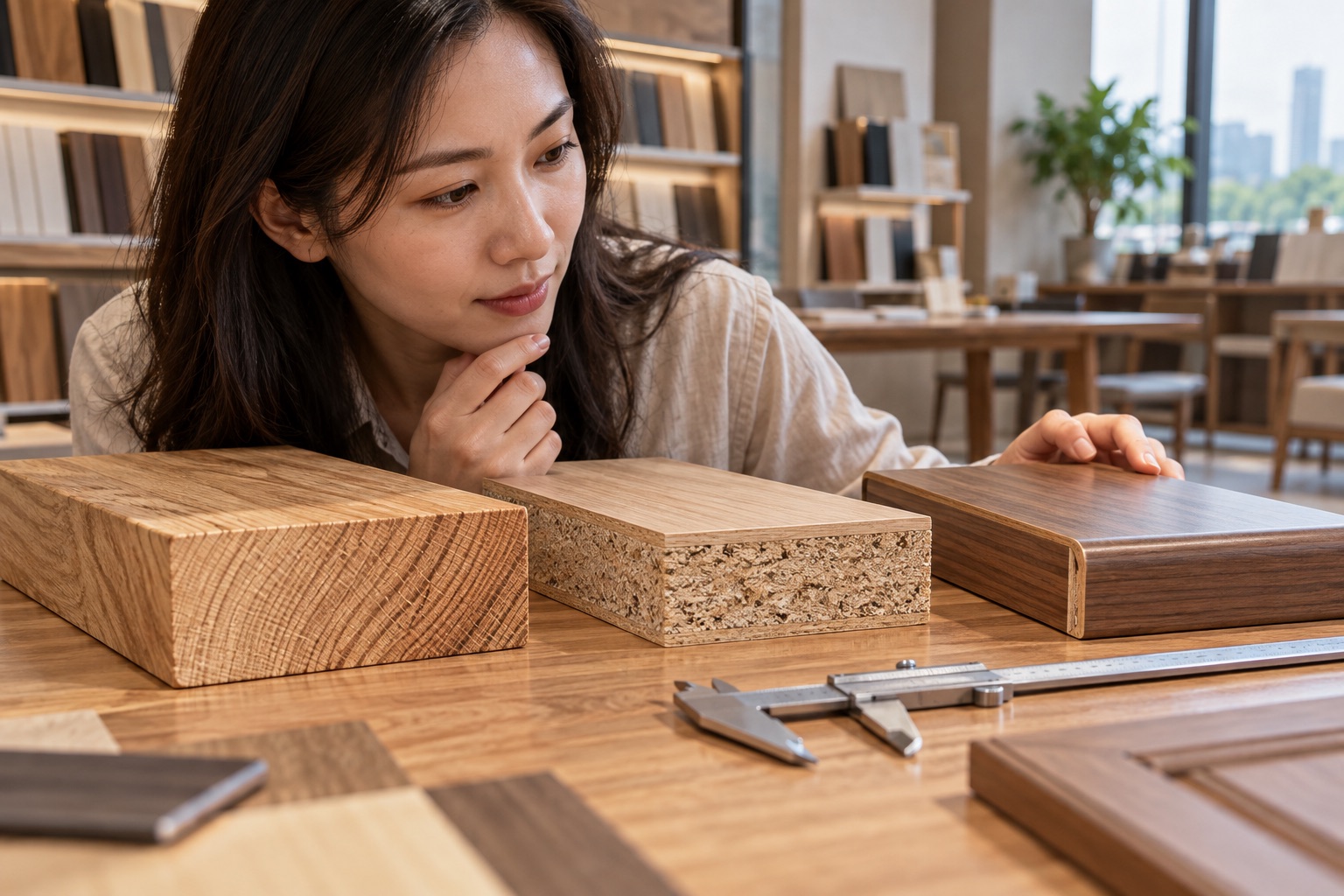
A furniture specification should say more than “solid wood” or “wooden.” Describe each part as solid wood, veneered construction or engineered-board substrate, then record the species or approved decorative name, veneer location and direction, board type, actual thickness, edge treatment, finish and approved sample. The specification must describe the construction rather than rely on an ambiguous sales label.
Scope of this guide
This guide provides an execution framework for furniture sourcing and product selection. Contract, inspection, freight, installation and destination-country requirements should be confirmed in writing by the relevant supplier or professional adviser.
Set the decision standard first
- Break down the construction by component
- Define substrate and veneer coverage
- Record solid-wood parts and joints
- Freeze edges and finish
What to define and retain
| Specification field | What to define |
|---|---|
| Break down the construction by component | Record materials and build-up separately for tops, doors, sides, drawers, backs and load-bearing parts |
| Define substrate and veneer coverage | State substrate type, actual thickness, veneer name, covered faces, joint pattern, grain direction and back treatment |
| Record solid-wood parts and joints | Identify the confirmed species name, section dimensions, lamination, joints and natural variation relevant to use |
| Freeze edges and finish | Define visible and hidden edges, edge material, colour, sheen, feel, coating system and care requirements |
| Verify with traceable samples | Retain numbered finish boards, material sections, neutral-light photographs and approval dates, with changes in a new version |
Recommended workflow
- Break down the construction by component: Record materials and build-up separately for tops, doors, sides, drawers, backs and load-bearing parts
- Define substrate and veneer coverage: State substrate type, actual thickness, veneer name, covered faces, joint pattern, grain direction and back treatment
- Record solid-wood parts and joints: Identify the confirmed species name, section dimensions, lamination, joints and natural variation relevant to use
- Freeze edges and finish: Define visible and hidden edges, edge material, colour, sheen, feel, coating system and care requirements
- Verify with traceable samples: Retain numbered finish boards, material sections, neutral-light photographs and approval dates, with changes in a new version
At every step, retain the product ID, version, date, owner and written confirmation so critical decisions do not remain only in chats or verbal discussions.
Common execution problems
- If this is not defined in writing: Break down the construction by component — Record materials and build-up separately for tops, doors, sides, drawers, backs and load-bearing parts
- If this is not defined in writing: Define substrate and veneer coverage — State substrate type, actual thickness, veneer name, covered faces, joint pattern, grain direction and back treatment
- If this is not defined in writing: Record solid-wood parts and joints — Identify the confirmed species name, section dimensions, lamination, joints and natural variation relevant to use
Execution checklist
- Confirmed and retained: Define substrate and veneer coverage
- Confirmed and retained: Record solid-wood parts and joints
- Confirmed and retained: Freeze edges and finish
- Confirmed and retained: Verify with traceable samples
Related guides on this site
- Metal Furniture Frame and Finish Specifications in Foshan
- Glass Furniture Specifications: Thickness, Edges, Holes and Support
- Outdoor Furniture Specifications: Exposure, Drainage, Fabric and Care
Frequently asked questions
Is solid wood always better than veneer or engineered board?
No. Suitability depends on structure, dimensional behaviour, appearance, care, budget and use environment; compare the complete specification.
Is one approved colour sample enough?
Usually not. Confirm substrate, veneer or solid-wood locations, grain direction, edges, sheen and acceptable natural variation.
Turn a wood label into component-level specifications for production and inspection
For project-specific execution, prepare the destination country, room list, quantities, critical dimensions, material preferences, budget direction and target timing, then use the contact section on this site.