Upholstery Seam and Stitching Specification for Sofas and Chairs
Define seam positions, thread appearance, topstitching, tufting, fabric direction, pattern matching and acceptable wrinkles for upholstery production.
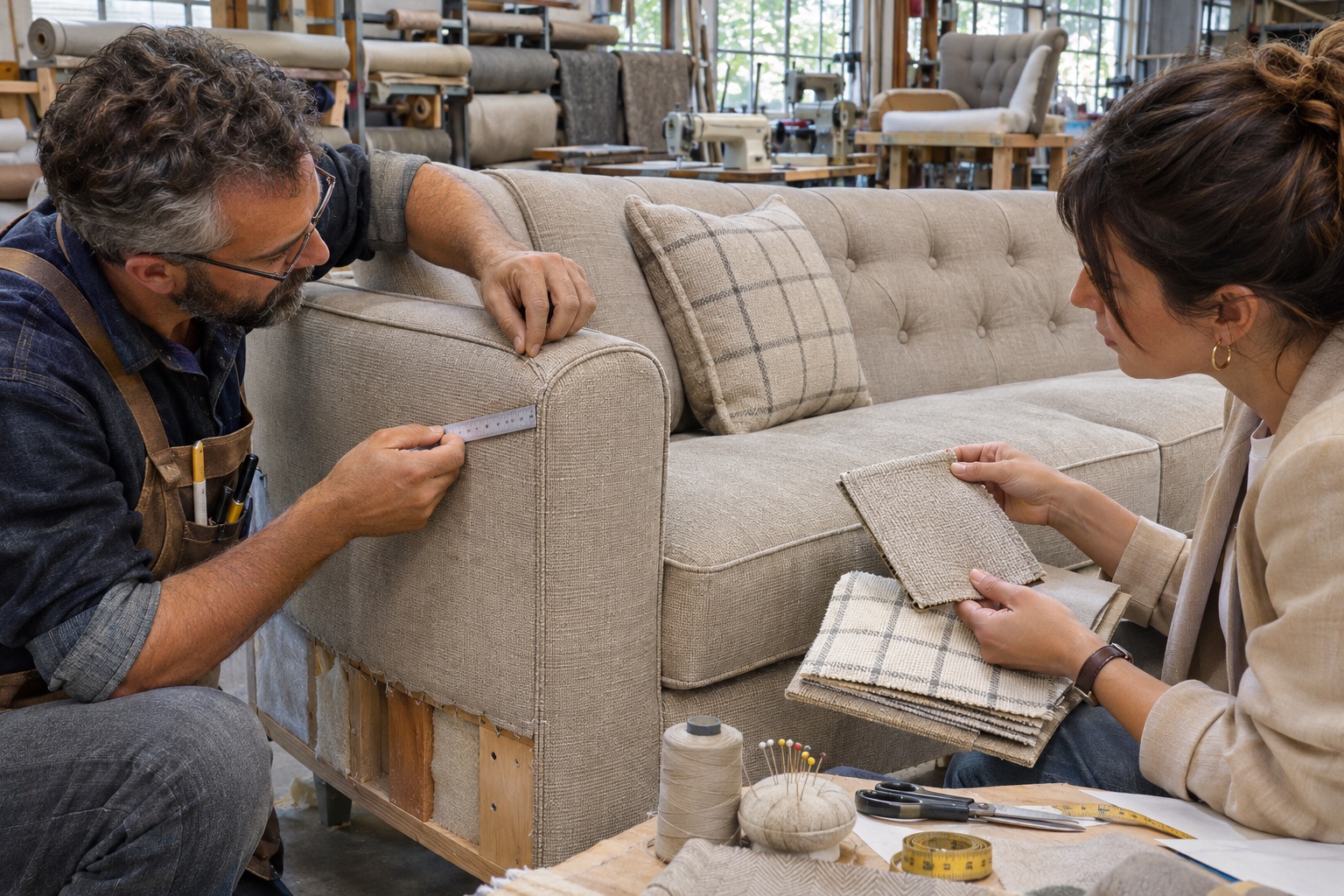
Many upholstery appearance problems come from unspecified seam position, stitching, tension or pattern direction rather than the fabric itself. Mark primary seams, topstitching, piping, tufting and buttons on the views; approve thread appearance, corner treatment, fabric direction and repeat matching; and use an approved sample to show acceptable curvature, wrinkles and tension.
Scope of this guide
This guide provides an execution framework for furniture sourcing and product selection. Contract, inspection, freight, installation and destination-country requirements should be confirmed in writing by the relevant supplier or professional adviser.
Set the decision standard first
- Mark seam construction on drawings
- Approve thread and appearance
- Control fabric direction and pattern
- Define tension, corners and wrinkles
What to define and retain
| Specification field | What to define |
|---|---|
| Mark seam construction on drawings | Show primary joins, decorative and double-needle lines, piping, tufting and removable-cover openings with front and reverse relationships |
| Approve thread and appearance | Define thread colour, visual weight, visible stitch character and finishing through a sample rather than the words “matching thread” alone |
| Control fabric direction and pattern | Mark nap, warp, stripe, check or repeat direction across seat, back, arms and adjacent modules and state the matching requirement |
| Define tension, corners and wrinkles | Use the approved sample and key photographs to distinguish intended fullness and natural folds from twisting, open seams or excessive looseness |
| Inspect the first unit and high-risk areas | Prioritize arm corners, zipper ends, load-bearing seams, module joints and repeated patterns and record every revised version |
Recommended workflow
- Mark seam construction on drawings: Show primary joins, decorative and double-needle lines, piping, tufting and removable-cover openings with front and reverse relationships
- Approve thread and appearance: Define thread colour, visual weight, visible stitch character and finishing through a sample rather than the words “matching thread” alone
- Control fabric direction and pattern: Mark nap, warp, stripe, check or repeat direction across seat, back, arms and adjacent modules and state the matching requirement
- Define tension, corners and wrinkles: Use the approved sample and key photographs to distinguish intended fullness and natural folds from twisting, open seams or excessive looseness
- Inspect the first unit and high-risk areas: Prioritize arm corners, zipper ends, load-bearing seams, module joints and repeated patterns and record every revised version
At every step, retain the product ID, version, date, owner and written confirmation so critical decisions do not remain only in chats or verbal discussions.
Common execution problems
- If this is not defined in writing: Mark seam construction on drawings — Show primary joins, decorative and double-needle lines, piping, tufting and removable-cover openings with front and reverse relationships
- If this is not defined in writing: Approve thread and appearance — Define thread colour, visual weight, visible stitch character and finishing through a sample rather than the words “matching thread” alone
- If this is not defined in writing: Control fabric direction and pattern — Mark nap, warp, stripe, check or repeat direction across seat, back, arms and adjacent modules and state the matching requirement
Execution checklist
- Confirmed and retained: Approve thread and appearance
- Confirmed and retained: Control fabric direction and pattern
- Confirmed and retained: Define tension, corners and wrinkles
- Confirmed and retained: Inspect the first unit and high-risk areas
Related guides on this site
- Furniture Upholstery Fabric Specification: Fibre, Batch and Direction
- How to Specify Upholstered Furniture in Foshan: Fabric, Comfort and Structure
- Sofa Cushion and Filling Specification: Layers, Support and Recovery
Frequently asked questions
Must the specification state one fixed stitch length?
A number may be needed by the product or contract, but consistency with the approved sample, even appearance and suitability for load areas are the core controls.
Are leather seams controlled like fabric seams?
Not exactly. Hide size, marks and stretch differ, so leather type, cutting position and sample need separate confirmation.
Give every visible seam a location, direction and approved reference
For project-specific execution, prepare the destination country, room list, quantities, critical dimensions, material preferences, budget direction and target timing, then use the contact section on this site.