Wood Veneer Grain Matching: Direction, Layout and Panel Specification
Define veneer type, grain direction, joining method, adjacent-panel matching, reference samples and acceptable natural variation.
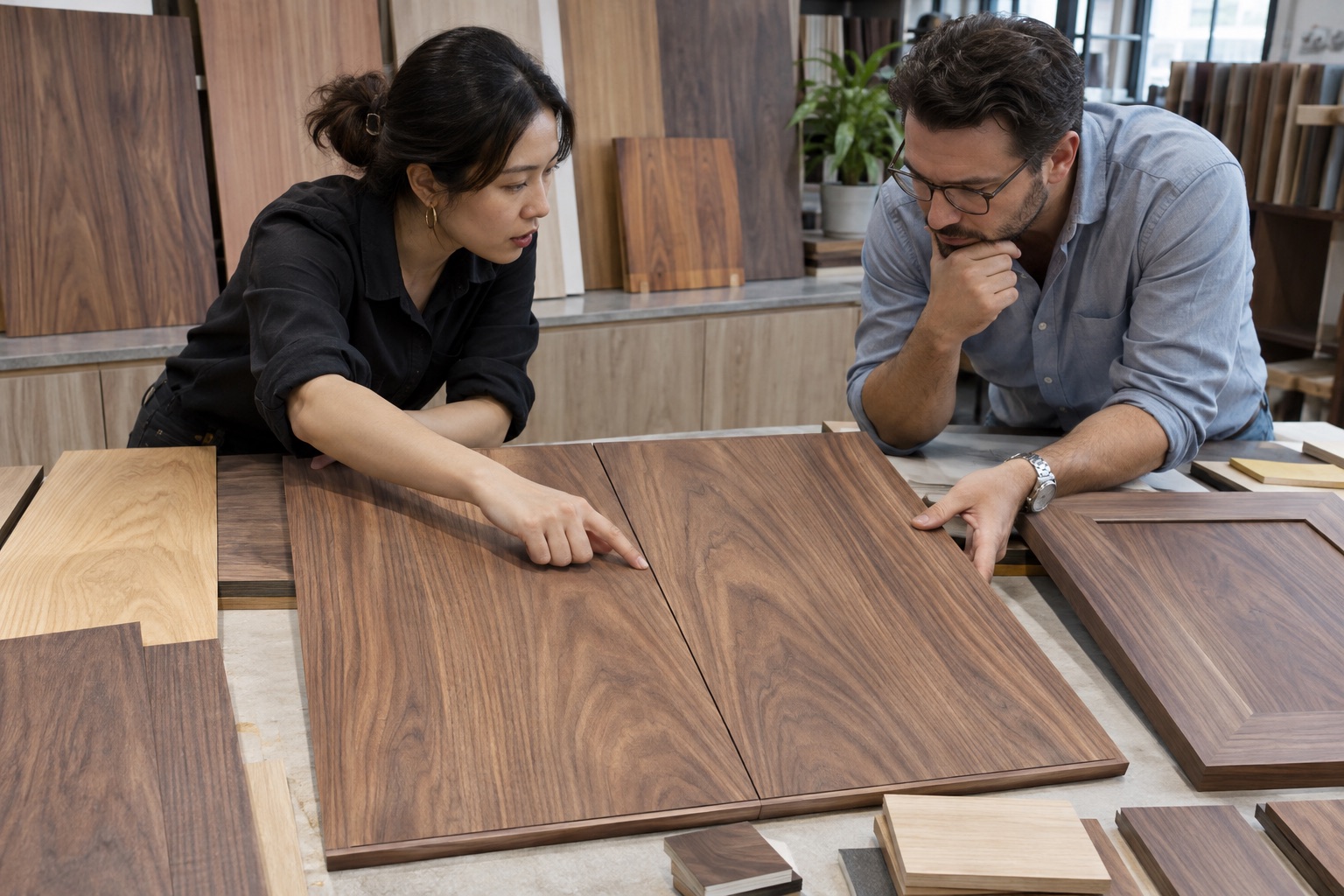
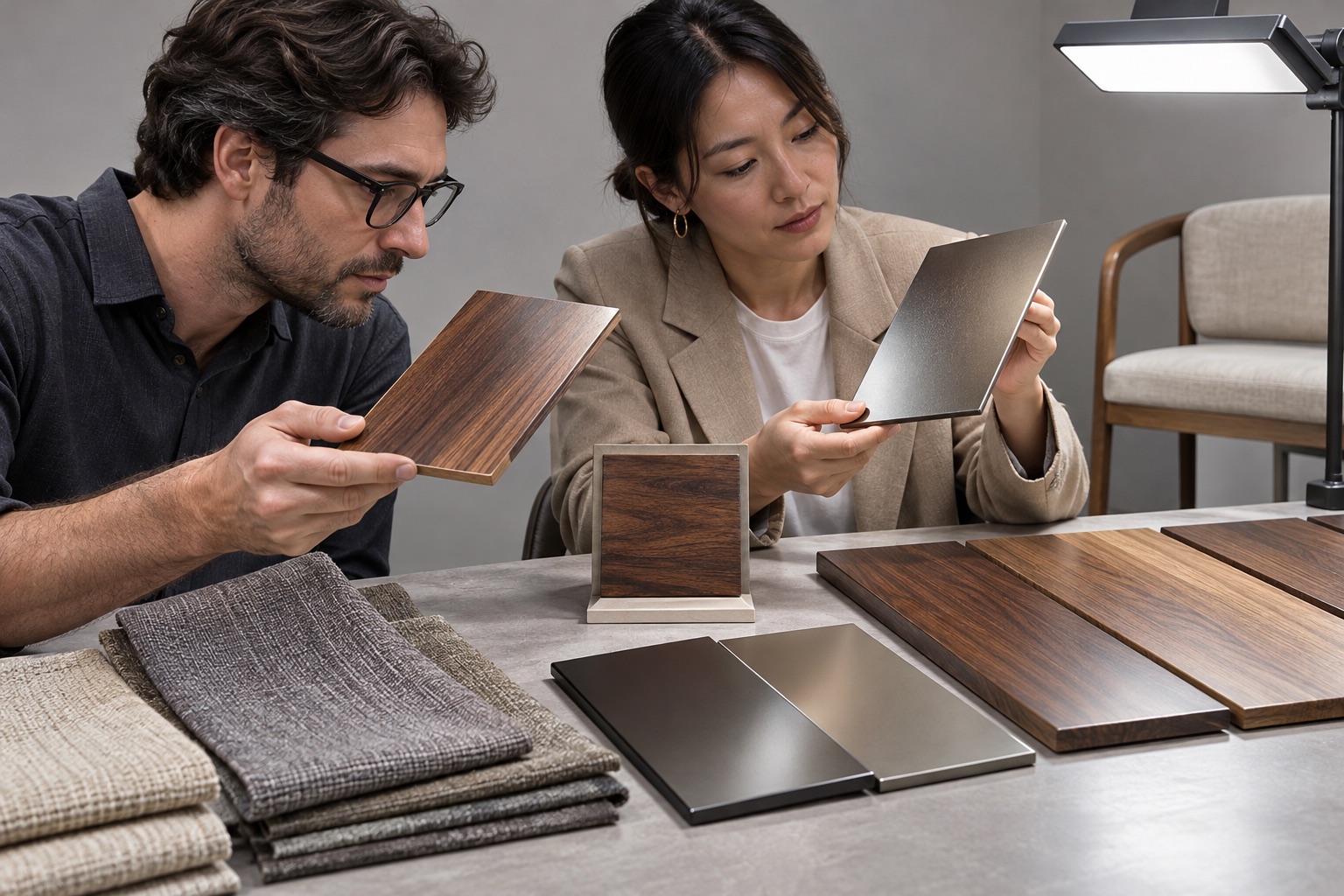
A veneer specification needs more than a wood name. Natural grain varies, so define the veneer description, cutting and joint appearance, grain direction, continuity across adjacent faces, selection rules for prominent surfaces and the sample controlling colour and character. Also state acceptable knots, colour movement and grain variation so a reference photograph is not mistaken for an exact natural replica.
Scope of this guide
This guide provides an execution framework for furniture sourcing and product selection. Contract, inspection, freight, installation and destination-country requirements should be confirmed in writing by the relevant supplier or professional adviser.
Set the decision standard first
- Define the veneer and references
- Confirm grain direction
- Specify jointing and continuity
- Set selection and natural-variation limits
What to define and retain
| Specification field | What to define |
|---|---|
| Define the veneer and references | State veneer category, natural or engineered character, application areas and what photographs, loose samples and an approved unit each control |
| Confirm grain direction | Mark vertical, horizontal, radial or decorative direction on elevations and coordinate doors, drawer fronts and side panels |
| Specify jointing and continuity | State whether slip match, book match, sequence match or random layout applies and identify the most visible continuous faces |
| Set selection and natural-variation limits | Describe acceptable knots, mineral lines, colour bands, grain jumps and repairs and where they should be excluded |
| Approve the layout before production | For large or multi-panel pieces, review a veneer layout photograph or first unit and retain batch, panel IDs and approval version |
Recommended workflow
- Define the veneer and references: State veneer category, natural or engineered character, application areas and what photographs, loose samples and an approved unit each control
- Confirm grain direction: Mark vertical, horizontal, radial or decorative direction on elevations and coordinate doors, drawer fronts and side panels
- Specify jointing and continuity: State whether slip match, book match, sequence match or random layout applies and identify the most visible continuous faces
- Set selection and natural-variation limits: Describe acceptable knots, mineral lines, colour bands, grain jumps and repairs and where they should be excluded
- Approve the layout before production: For large or multi-panel pieces, review a veneer layout photograph or first unit and retain batch, panel IDs and approval version
At every step, retain the product ID, version, date, owner and written confirmation so critical decisions do not remain only in chats or verbal discussions.
Common execution problems
- If this is not defined in writing: Define the veneer and references — State veneer category, natural or engineered character, application areas and what photographs, loose samples and an approved unit each control
- If this is not defined in writing: Confirm grain direction — Mark vertical, horizontal, radial or decorative direction on elevations and coordinate doors, drawer fronts and side panels
- If this is not defined in writing: Specify jointing and continuity — State whether slip match, book match, sequence match or random layout applies and identify the most visible continuous faces
Execution checklist
- Confirmed and retained: Confirm grain direction
- Confirmed and retained: Specify jointing and continuity
- Confirmed and retained: Set selection and natural-variation limits
- Confirmed and retained: Approve the layout before production
Related guides on this site
- Solid Wood, Veneer and Engineered Board Furniture Specifications
- Approving Wood Furniture Colour and Finish Samples in Foshan
- Furniture Dimensions and Tolerances in Foshan: Drawings and Acceptance
Frequently asked questions
Can natural veneer look identical on every item?
Usually not. Same-batch selection, layout and samples can control harmony, but natural grain should not be promised as an exact repeat.
Is a colour sample enough?
No. A small colour sample does not show large-scale grain, joint layout or continuity across doors and panels.
Turn veneer appearance into an executable panel-layout specification
For project-specific execution, prepare the destination country, room list, quantities, critical dimensions, material preferences, budget direction and target timing, then use the contact section on this site.